Why Cheap Wi-Fi Costs More in the Long Run
How Investing in the Right Network Saves Money, Frustration, and Time
Read Time: 7 minutes
Author: Christopher Subbiondo
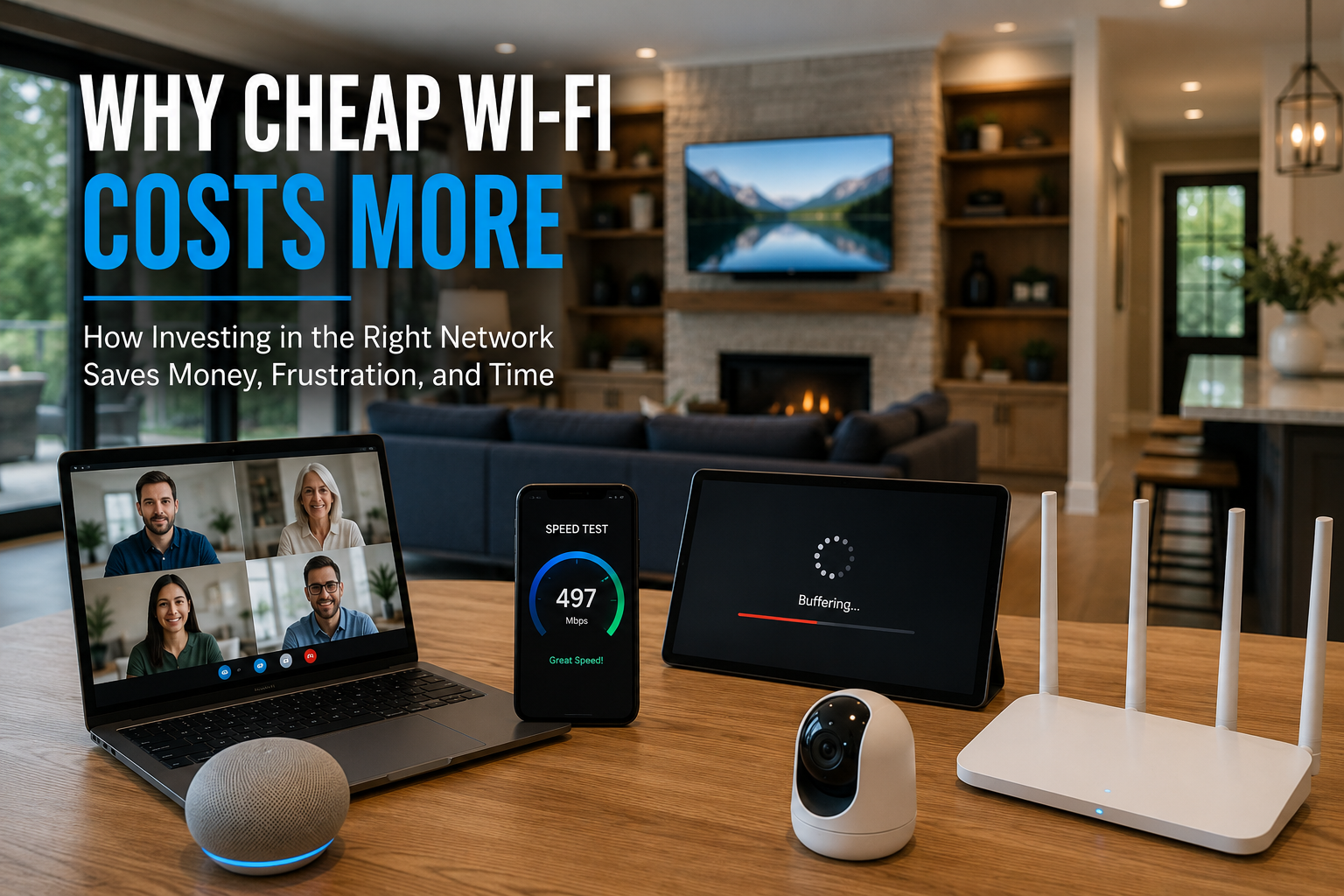
If your Wi-Fi isn't working, your smart home isn't either.
One of the biggest misconceptions homeowners have is that Wi-Fi is just another utility—something you buy once and forget about.
In reality, your Wi-Fi network has become the foundation of nearly every technology system in your home.
Streaming TVs, Sonos speakers, smart lighting, security cameras, video doorbells, gaming consoles, work-from-home offices, voice assistants, and even appliances now depend on a reliable network.
When the network struggles, everything else appears to be broken.
At WSC Smart Home Designers, we've visited countless homes throughout Chesapeake, Virginia Beach, Norfolk, Suffolk, and Williamsburg where homeowners believed they needed new televisions, cameras, or audio equipment. In many cases, the real culprit was an inadequate Wi-Fi network.
The Hidden Cost of Cheap Wi-Fi
When someone buys the least expensive router from a big-box store, it often seems like a smart financial decision.
Unfortunately, those savings usually disappear over time.
Common symptoms include:
- TVs buffering during movie night
- Video calls freezing while working from home
- Security cameras dropping offline
- Smart home devices becoming unreliable
- Dead zones throughout the home
- Slow speeds despite paying for fast internet
Many homeowners respond by purchasing Wi-Fi extenders.
Then another.
Then another.
Before long, they've spent hundreds of dollars trying to fix a problem that was never the internet service—it was the network design.
What Makes a Home Truly Smart?
Bigger Isn't Always Better
A common question we hear is:
"Should I just buy the most powerful router I can find?"
Not necessarily.
Think of Wi-Fi like lighting in your home.
One extremely bright light bulb in the middle of your house doesn't illuminate every room evenly.
Instead, your home uses many lights positioned throughout the space.
Wi-Fi works the same way.
Professionally designed systems use multiple access points placed strategically throughout the home, creating consistent coverage instead of relying on one overloaded router trying to reach every corner.
Every Home Is Different
There is no universal formula for Wi-Fi.
Several factors determine the right design:
- Home size
- Construction materials
- Number of floors
- Outdoor living areas
- Device count
- Internet usage
- Future expansion plans
A 2,500-square-foot open-concept home may need fewer access points than a heavily insulated 1,800-square-foot home with brick walls and multiple additions.
That's why professional design matters.
Planning for Tomorrow
Many homeowners only think about today's devices.
But what about five years from now?
Modern homes continue adding:
- More security cameras
- Smart lighting
- Motorized shades
- Electric vehicle chargers
- Smart appliances
- Outdoor entertainment
- Home offices
- AI-powered assistants
Building a network that supports future growth helps avoid expensive upgrades later.
Reliability Matters More Than Speed
One of the biggest surprises we tell homeowners is this:
You probably don't need gigabit Wi-Fi everywhere.
What you need is consistent Wi-Fi.
Reliable coverage is more valuable than occasional speed tests showing impressive numbers.
A stable 300 Mbps connection throughout your home provides a better experience than a 1 Gbps connection that disappears every time you walk upstairs.
How Many Wifi Access Points do I really need?
Why Professional Network Design Makes a Difference
At WSC Smart Home Designers, we don't simply install access points.
We design networks around the way your family lives.
That includes evaluating:
- Device placement
- Coverage requirements
- Roaming performance
- Outdoor spaces
- Security
- Scalability
- Equipment cabinet organization
- Future technology integration
The goal isn't just faster internet.
The goal is a home where technology simply works.
Serving Hampton Roads Homeowners
Whether you're building a new home in Chesapeake, renovating a waterfront property in Virginia Beach, upgrading your network in Suffolk, or creating a connected home in Williamsburg, thoughtful network design can improve nearly every aspect of your daily life.
A properly designed Wi-Fi network becomes invisible—you don't think about it because everything works the way it should.
And that's exactly how technology should feel.
Ready to Build a Better Network?
If you're tired of buffering, dead zones, or unreliable smart home devices, we'd love to help.
Schedule a consultation with WSC Smart Home Designers, and we'll evaluate your home's current network and design a solution that supports the way you live today—and tomorrow.
Designed Systems. Elevated Living.
When you subscribe to the blog, we will send you an e-mail when there are new updates on the site so you wouldn't miss them.
