Smart Home Lighting Design in Smithfield, Virginia: Where Technology Meets Timeless Elegance
Estimated Reading Time: 6-7 Minutes
Discover how WAC Lighting, Lutron architectural lighting, and Control4 smart home automation come together to create a beautiful, functional, and intelligently connected living space.
When you walk into a beautifully designed home, you may not immediately notice the technology working behind the scenes. Instead, you notice how the space makes you feel. The lighting is inviting, the architectural details stand out, and everything seems to work together effortlessly.
That is precisely what thoughtful smart home design should accomplish.
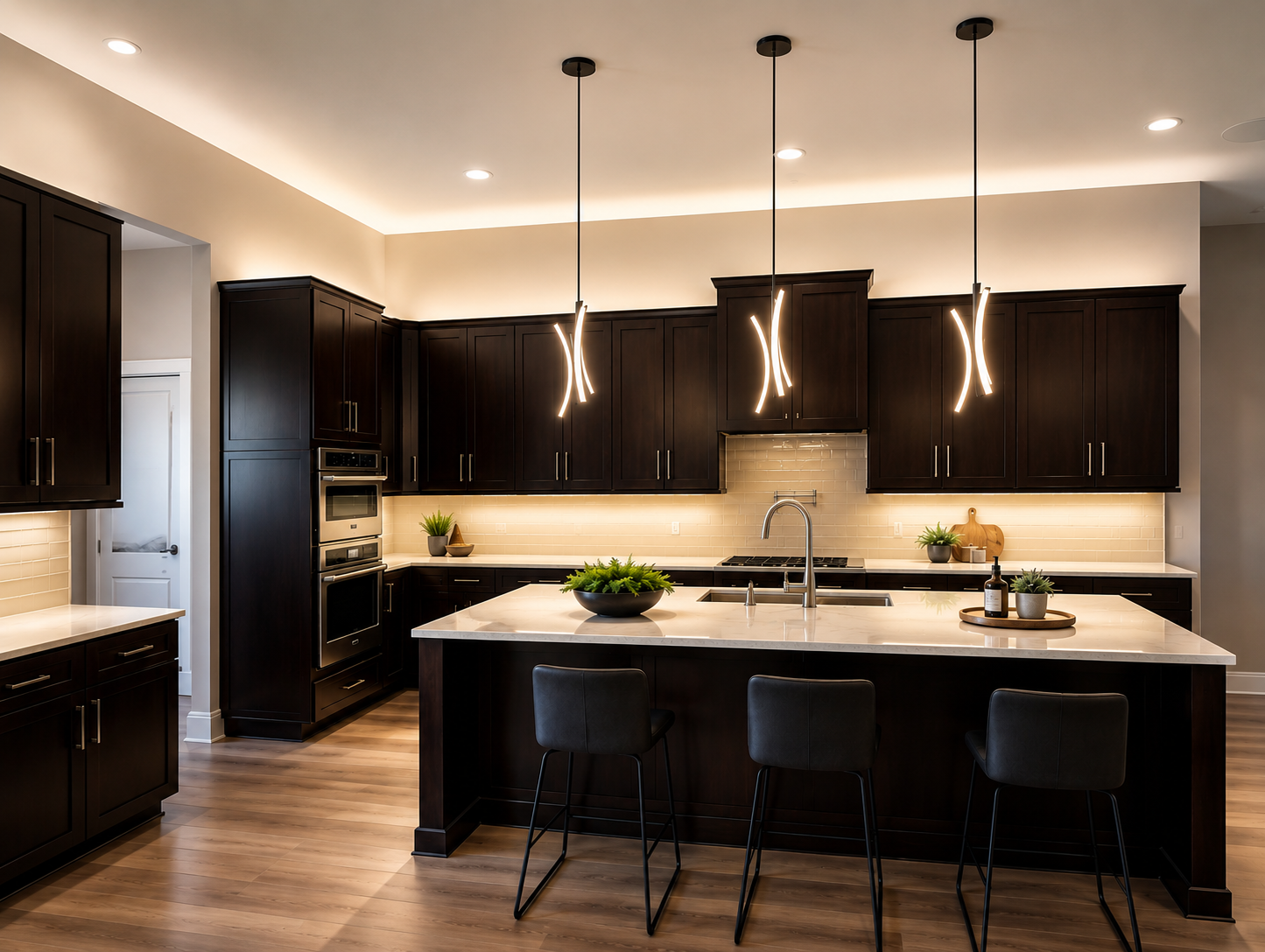
In this stunning kitchen in Smithfield, Virginia, WSC Smart Home Designers brought together three industry-leading technologies—WAC Lighting, Lutron, and Control4—to create a sophisticated lighting environment that balances architectural beauty with everyday convenience.
The result is more than an attractive kitchen. It is a living space where technology enhances the home's design rather than competing with it.
The Foundation of Exceptional Lighting Design
Lighting is one of the most important elements of interior design, yet it is frequently treated as an afterthought during construction or renovation.
Homeowners often spend considerable time selecting cabinetry, countertops, flooring, and appliances, only to approach lighting as a simple matter of choosing fixtures and deciding where switches should go.
At WSC Smart Home Designers, we believe lighting deserves the same level of consideration as every other architectural feature.
A well-designed lighting system does more than illuminate a room. It creates depth, establishes atmosphere, highlights architectural details, and allows a space to adapt to different activities throughout the day.
In this Smithfield kitchen, the lighting design incorporates multiple layers of illumination, each serving a distinct purpose while contributing to the overall aesthetic.
These layers include decorative pendant lighting from WAC Lighting, linear architectural lighting controlled through Lutron, and recessed ceiling lighting. The various lighting elements are brought together through a Control4 smart home control system.
Rather than operating as unrelated fixtures, these lighting elements can work together to create a cohesive experience.
WAC Lighting: Making a Statement Without Overpowering the Space
One of the first features that draws attention in this kitchen is the collection of elegant pendant fixtures suspended above the island.
Manufactured by WAC Lighting, these contemporary fixtures combine sculptural design with functional illumination.
Their slender, curved profiles create an artistic focal point above the expansive countertop. The warm illumination contrasts beautifully with the dark cabinetry, while the minimalist design complements the kitchen's clean architectural lines.
Decorative lighting serves a unique role within a home.
Unlike recessed fixtures, which are generally intended to blend into the ceiling, decorative pendants are meant to be seen. They become part of the room's personality, much like a carefully selected piece of furniture or artwork.
However, selecting a beautiful fixture is only one part of the process.
Proper placement, spacing, mounting height, and integration with the surrounding lighting all contribute to the final appearance.
For example, pendant lighting above a kitchen island should provide sufficient illumination for everyday activities without creating uncomfortable glare or obstructing sightlines across the room.
The fixtures should also complement the scale of the island and the height of the ceiling.
In this installation, the three WAC Lighting pendants establish a balanced visual rhythm across the island, creating a distinctive centerpiece without overwhelming the surrounding architecture.
The goal is not simply to add more light. It is to place the right light in the right location for the right purpose.
Lutron Linear Lighting: Highlighting the Architecture
While the pendant fixtures immediately capture attention, some of the most important lighting elements in this kitchen are far less noticeable.
The warm linear lighting beneath the cabinetry and along the upper architectural transitions creates a subtle glow that adds depth and dimension to the space.
This is where Lutron lighting technology plays an important role.
Linear lighting is an excellent example of how architectural illumination can transform a room without requiring a prominent decorative fixture.
Rather than drawing attention to the light source itself, the objective is to illuminate the surrounding surfaces.
Under-Cabinet Lighting
The linear lighting beneath the upper cabinets provides illumination across the backsplash and countertop surfaces.
This serves two important purposes.
First, it improves visibility in areas where overhead lighting may create shadows. Preparing food, reading recipes, and working along the countertops become easier when the workspace is properly illuminated.
Second, it introduces a warm, inviting glow that softens the contrast between the dark cabinetry and the lighter backsplash.
During the evening, this lighting can provide a comfortable alternative to fully illuminating the kitchen.
Architectural Accent Lighting
The lighting near the ceiling adds another dimension to the design.
By illuminating the architectural transitions above the cabinetry, the lighting helps define the room's proportions and creates a sense of openness.
This technique is particularly effective in kitchens with taller ceilings, where traditional recessed lighting alone may leave the upper portions of the room visually disconnected.
The resulting indirect illumination creates a softer atmosphere while emphasizing the home's architectural features.
Why Lighting Quality Matters
Not all linear lighting performs the same way.
Important considerations include color temperature, color rendering, brightness, dimming compatibility, and how consistently the light is distributed along the installation.
A properly designed system should avoid noticeable bright spots, uneven illumination, and distracting differences in color between fixtures.
Equally important is the ability to dim the lighting smoothly.
Bright lighting may be desirable when preparing dinner, but that same level of illumination can feel excessive when entertaining guests later in the evening.
With thoughtfully designed Lutron lighting control, the homeowner can adjust the intensity of the lighting to better suit the occasion.
This flexibility is one of the defining differences between basic electrical lighting and a professionally designed architectural lighting system.
Control4: Bringing the Entire Experience Together
Beautiful fixtures and carefully planned lighting are essential, but the true convenience of a smart home comes from how easily everything can be controlled.
For this Smithfield residence, Control4 serves as the central control system, bringing the lighting experience together through a unified interface.
Instead of requiring homeowners to manage multiple individual switches or separate applications, Control4 provides a more intuitive approach to interacting with the home.
Lighting can be organized into customized scenes, allowing several fixtures or lighting zones to respond together.
Imagine walking into the kitchen in the morning and selecting a single lighting scene that provides bright, comfortable illumination for preparing breakfast.
Later in the evening, another scene could reduce the intensity of the recessed lighting, softly illuminate the cabinetry, and allow the decorative pendants to become the primary focal point.
The homeowner no longer needs to think about which individual switches should be adjusted.
They simply select the atmosphere they want to create.
Lighting Scenes Designed Around Everyday Life
One of the greatest advantages of an integrated control system is the ability to personalize the home's operation.
Depending on the home's programming and the homeowner's preferences, lighting scenes might include:
-
Cooking: Bright, balanced illumination across the island and countertops for food preparation.
-
Entertaining: Warm pendant lighting and subtle architectural accents that create a welcoming environment for guests.
-
Evening: Reduced lighting levels that provide comfortable illumination without overpowering the room.
-
Goodnight: A convenient command that turns off designated lights throughout the home.
-
Away: A scene that adjusts selected lighting as the homeowner leaves the house.
These scenes are examples of what a professionally programmed Control4 system can provide, rather than a list of confirmed programming features in this particular residence.
The real value lies in designing the system around how the homeowner actually uses the space.
A family that regularly entertains may prefer different lighting arrangements than someone who primarily uses the kitchen for cooking and casual dining.
That is why customization is such an important part of the design process.
Why Integrating Multiple Brands Creates a Better Smart Home
A common misconception about smart home technology is that every device must come from the same manufacturer.
In reality, some of the most effective smart home systems combine products from several specialized manufacturers.
Each company brings different strengths to the project.
WAC Lighting offers decorative and architectural fixtures that complement the home's interior design.
Lutron specializes in sophisticated lighting control, dimming technology, and architectural lighting solutions.
Control4 provides the broader automation platform that allows compatible technologies throughout the home to operate through a unified experience.
By bringing these technologies together, WSC Smart Home Designers can focus on selecting the right products for each application rather than limiting the entire design to a single manufacturer's catalog.
This approach is especially valuable when designing custom homes, where aesthetics, performance, and long-term flexibility are equally important.
It also allows the homeowner to enjoy a more cohesive experience.
The technology becomes less about individual products and more about what the home can accomplish as a complete system.
Smart Lighting Is About More Than Convenience
Although convenience is one of the most obvious benefits of smart lighting, it is far from the only advantage.
Comfort and Atmosphere
Lighting has a significant influence on how a room feels.
Bright, evenly distributed illumination supports tasks that require visibility and attention, while softer lighting creates a more relaxed environment.
The ability to transition between these conditions allows the same room to serve multiple purposes without compromising its appearance.
Preserving Interior Design
In a carefully designed home, an excessive number of wall switches can detract from otherwise clean architectural finishes.
A thoughtfully planned lighting control system can reduce the need for banks of individual controls by grouping compatible lighting functions into intuitive keypads and scenes.
The result can be a cleaner appearance and a more convenient way to operate the space.
Energy Management
Dimming lighting when full brightness is unnecessary can reduce energy consumption.
Automated schedules, occupancy-based control, and coordinated lighting scenes may provide additional opportunities to avoid unnecessary lighting usage when supported by the installed system.
While energy savings depend on how a home is designed and operated, intelligent control gives homeowners greater flexibility over when and how their lighting is used.
Future Integration
A Control4 system can also serve as the foundation for additional smart home features.
Compatible whole-home audio, automated window treatments, entertainment systems, climate control, and security technologies can be incorporated into a broader home automation experience.
For example, a homeowner might eventually choose to create an entertaining scene that adjusts lighting, lowers automated shades, and starts music throughout selected rooms.
This ability to coordinate multiple systems is what separates comprehensive home automation from a collection of independently operated smart devices.
Why Professional Smart Home Design Matters
It is easy to assume that installing smart lighting simply means replacing traditional switches with connected alternatives.
However, a successful installation involves considerably more planning.
Fixture selection, electrical requirements, dimming compatibility, control system architecture, lighting placement, programming, and homeowner preferences must all be considered.
Even small details can make a significant difference.
A poorly positioned fixture may create uncomfortable glare. An incompatible dimmer may produce flickering or inconsistent performance. A complicated control interface may make an otherwise impressive system frustrating to use.
Professional integration addresses these considerations before they become problems.
At WSC Smart Home Designers, our process begins with understanding the homeowner's goals and how each space will be used.
We work to identify the appropriate technologies, coordinate their integration, and develop a control experience that feels natural.
Our philosophy is simple:
Technology should make your home easier to enjoy, not more complicated to operate.
The most successful smart home systems are often the ones homeowners barely notice because everything works the way they expect.
Designed for Today. Ready for Tomorrow.
This Smithfield kitchen illustrates how smart home technology and interior design can complement one another.
The WAC Lighting pendants contribute an unmistakable decorative statement.
The Lutron-controlled linear lighting highlights architectural details and creates a warm, layered environment.
Control4 brings the lighting elements together into a convenient, integrated control experience.
Individually, each component contributes something valuable. Together, they create a space that is both beautiful and functional.
As homeowners continue to invest in more sophisticated kitchens, living spaces, and custom residences, thoughtful technology integration is becoming an increasingly important part of the design conversation.
Whether you are building a new home, renovating an existing property, or upgrading an outdated lighting system, the best time to consider smart home technology is during the design process.
Early planning allows lighting, controls, wiring, and architectural details to be coordinated for a more polished finished product.
Bring Intelligent Lighting Into Your Home
At WSC Smart Home Designers, we believe exceptional technology should enhance the way you live while respecting the beauty of your home.
From architectural lighting and decorative fixtures to whole-home automation and personalized control systems, our team designs integrated solutions tailored to each homeowner's needs.
We proudly serve Smithfield, Suffolk, Chesapeake, Virginia Beach, Norfolk, Newport News, and the greater Hampton Roads area.
If you are planning a new home, remodeling an existing space, or exploring the possibilities of intelligent lighting, we would welcome the opportunity to discuss your project.
Contact WSC Smart Home Designers to schedule a personalized smart home consultation.
WSC Smart Home Designers — Designed Systems, Elevated Living.
When you subscribe to the blog, we will send you an e-mail when there are new updates on the site so you wouldn't miss them.